Free delivery on orders over €150


The Different Types of Smoked Salmon: A Complete Guide

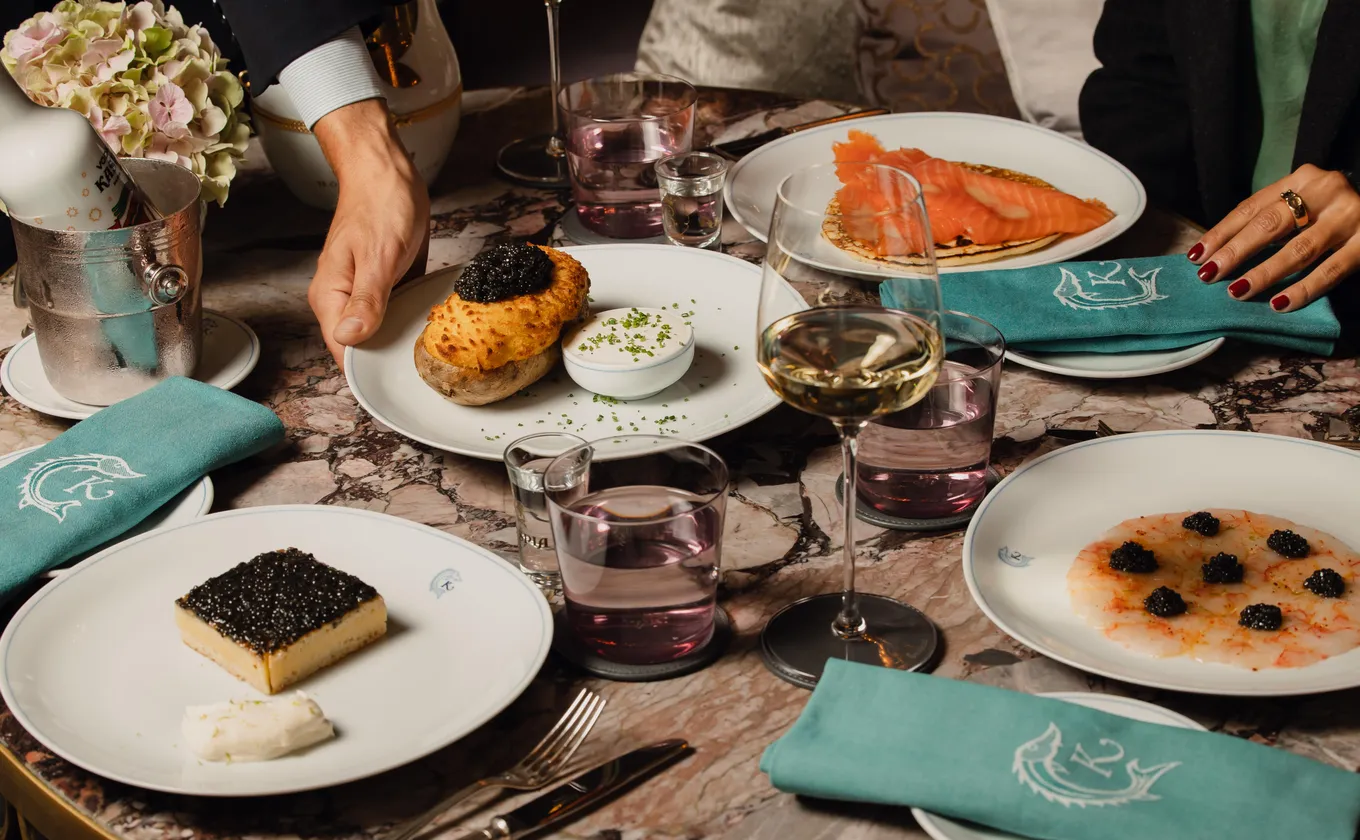
Smoked salmon from Scotland, Norway, and wild Alaskan salmon; gravlax; cold-smoked; hot-smoked—the term «smoked salmon» encompasses products that are radically different in taste, texture, and price. Knowing how to tell them apart is the difference between a successful holiday dish and a disappointment wrapped in plastic.
This guide covers the different varieties, origins, smoking methods, and quality criteria to help you choose the right smoked salmon—the one that suits your taste and your table.
Origins: Where Does Smoked Salmon Come From?
A salmon’s origin determines its flesh, flavor, and texture even before the smoking process begins. Three major regions dominate the market, each with very different characteristics.
Norwegian salmon
Norway is the world's leading producer of farmed salmon (Salmo salar). The Norwegian fjords offer cold, oxygen-rich waters that produce fish with fatty, melt-in-your-mouth, and uniform flesh. The Norwegian Smoked Salmon is a classic on French holiday tables—a mild, buttery flavor with a subtle smokiness that lets the fish shine.
Farmed Norwegian salmon has the advantage of consistency. From one slice to the next, the texture and flavor are consistent. It’s the safe choice for a meal where you want to be sure of the result. The Norwegian salmon heart — The center cut of the fillet, which is the thickest and most tender — is the prime cut, the one that melts in your mouth without any gristle.
Scottish salmon
Scottish salmon (whether Label Rouge or not) is raised in the lochs and cold waters of the Highlands. The difference from Norwegian salmon lies in its diet and the stronger currents, which result in firmer flesh and a more pronounced flavor—more pronounced marine notes, a slight bitterness on the finish, and a texture that offers more resistance when chewed.
Scottish smoked salmon is often smoked over oak wood, and sometimes over beech wood or in whiskey casks—woods that impart toasty and vanilla notes. It’s the salmon of choice for connoisseurs who prefer character over sweetness.
Wild Salmon
Wild salmon—mainly from Alaska (sockeye salmon, king salmon) or the Pacific—is in a class of its own. Its flesh is leaner and firmer, with an intense, clean flavor that is unlike anything found in farmed salmon. Its color is naturally redder than that of farmed salmon, thanks to the krill and shrimp it feeds on in the ocean.
Wild-caught smoked salmon is a seasonal product and more expensive. It has a strong flavor—almost meaty in the case of king salmon—and isn’t for those looking for the buttery sweetness of Norwegian salmon. It’s a connoisseur’s choice, best served on its own or with very simple accompaniments so as not to mask its distinctive character.
Cold-smoked, hot-smoked, gravlax: three techniques, three results
The method of preparation is just as important as the fish's origin. The three main techniques result in fundamentally different products.
Cold Smoking
This is the traditional method for smoking salmon as it is known in France. The fish is first salted (with dry salt or in brine), then smoked at a temperature that never exceeds 30 °C—usually between 20 and 28 °C—for several hours, sometimes several days.
The result: raw fish transformed by smoke and salt. The texture is tender, silky, and almost translucent in the best cuts. The flavor combines fish, salt, and smoke in a balance that varies depending on the smoker—the type of wood used, the smoking time, and the intensity of the salting. The Norwegian Smoked Salmon is a classic cold-smoked product.
This is the smoked salmon found on seafood platters, as an appetizer on toast, on bagels, and on Nordic-style plates. It’s served chilled (taken out of the refrigerator 10 minutes beforehand) and is never cooked—cooking would ruin its texture.
Hot smoking
The fish is smoked at a temperature above 60 °C, sometimes as high as 80 °C. Unlike cold smoking, the fish is cooked during the process. The result is radically different: opaque, flaky flesh with a more pronounced smoky flavor and a texture that is more reminiscent of cooked fish than traditional smoked salmon.
Hot-smoked salmon is less common in France but very popular in the Nordic countries and North America. It is eaten in salads, flaked over pasta, or as rillettes. It is more of a cooking ingredient than a product meant purely for tasting.
Gravlax
Gravlax isn't smoked salmon—it's marinated salmon. The fillet is coated with a mixture of salt, sugar, dill, and sometimes pink peppercorns or beets, then pressed for 48 to 72 hours in the refrigerator. No smoke, no cooking—just salt, sugar, and time transforming the flesh.
The result is a remarkably mild salmon, with herbaceous notes (dill), a hint of sweetness, and a melt-in-your-mouth texture. Gravlax is the Scandinavian alternative to smoked salmon—a dish that often appeals to those who find smoked salmon too strong.
Beyond Salmon: Other Smoked Fish
Salmon dominates the market, but other smoked fish are worth trying—and can sometimes be found on the same festive table.
L’Royal White Sturgeon Smoked fish is a rarity. The same fish that produces caviar yields white, firm, and delicate flesh when smoked. It pairs naturally with caviar—serving the two together in the same meal creates a connection between the two products that connoisseurs appreciate.
Visit Smoked Sprats from Riga are a Baltic classic—small, smoked, canned fish, golden and fragrant, that make a great appetizer with ice-cold vodka. It’s a niche product that pleasantly surprises those who aren’t familiar with it.
Smoked trout, smoked mackerel, smoked eel—each has its own distinct character. Trout is the closest to salmon (same family), but more delicate. Mackerel is robust and fatty, most often hot-smoked. Smoked eel is a delicacy in Northern countries—its flesh is fatty, the smoke is intense, and the flavor is unlike anything else.
Criteria for Identifying Good Smoked Salmon
As with the foie gras, there are a few key indicators that help distinguish high-end products from run-of-the-mill ones.
Color. A uniform salmon-pink color (named after the fish), with no brown or discolored areas. A color that is too bright, almost fluorescent, may indicate the addition of food coloring—check the ingredient list. Wild salmon is naturally redder than farmed salmon.
The texture. Soft and silky to the touch, neither dry nor spongy. When you lift a slice, it should bend without breaking. High-quality smoked salmon has visible fat between the fibers—it’s this fat that makes it melt in your mouth. Dry, stringy salmon has been oversalted or over-smoked.
The thickness of the slices. Thick slices (3 to 4 mm) preserve the texture and flavor. Very thin, translucent slices look nice but dry out faster and have less body. A good smoker slices by hand—the slices aren’t perfectly identical, and that’s a good sign.
The smell. A mild, ocean-like, pleasant smoky aroma. No strong fishy, rancid, or ammonia-like odors. If the smell puts you off when you open the package, don't eat it.
The list of ingredients. Salmon, salt, smoke (wood). That’s it. Added sugars (dextrose, glucose syrup), liquid smoke flavorings, preservatives, and food coloring are signs of an industrial product. Good artisanal smoked salmon needs only three ingredients.
Salt. Good smoked salmon is not very salty—the salt is there to transform and preserve, not to mask the flavor. If salt is the first thing you taste, the product is too salty. Dry salting (by hand) produces a more delicate result than brine salting (by injection).
How to Serve Smoked Salmon
The service is what sets apart a smoked salmon that makes an impression from one that goes unnoticed.
The temperature. Take the salmon out of the refrigerator 10 to 15 minutes before serving. If it’s too cold, the flavors are locked in and the fat makes the texture tough. The ideal temperature range is between 8 and 14 °C—cool but not icy.
The Presentation. On a salmon plate or a simple dish, with the slices arranged in rosettes or simply laid flat. Do not stack them—each slice must be accessible without tearing the one below it.
Classic side dishes. From blinis lukewarm or mini blinis For an appetizer: thick crème fraîche, capers, finely sliced red onion, and a squeeze of lemon. Toasted rye bread is the traditional Nordic accompaniment—its mild tartness contrasts with the richness of the salmon.
Less-known side dishes. Visit fresh salmon roe on a blini with smoked salmon create an «all-salmon» pairing that works remarkably well. The Salmon Fillet with Summer Truffles is a product that combines two worlds—smoked flavors and truffles—into a single, unique creation. And a Tarama Selection Served alongside smoked salmon, it makes for a complete dish centered on seafood.
What wine goes well with smoked salmon?
Smoked salmon is a fatty, smoked food—two characteristics that influence the choice of wine.
A crisp, dry white wine is the safest bet. A Chablis, a Sancerre, or a Pouilly-Fumé—their minerality and acidity cut through the richness just as champagne does with caviar. Our article on the Caviar and Champagne Pairings explains this process, which also applies to smoked salmon.
A Champagne Brut Prestige is the quintessential festive pairing—bubbles and smoke make a duo that has become a holiday tradition.
Visit Vodka Blanche Kaspia Ice is the Russian and Scandinavian pairing—neutral and syrupy in the cold, it cleanses the palate between each bite without adding anything. It’s the same principle as the vodka-caviar pairing, applied to smoked salmon.
When serving gravlax, a dry Riesling from Alsace adds a hint of fruity sweetness that complements the sugar in the marinade and the dill.
Preservation: The Essential Rules
Smoked salmon is a fresh product that requires careful handling.
Unopened vacuum-sealed package. Refrigerator, between 0 and 4 °C. The best-by date is generally 3 to 5 weeks after packaging—check the date on the package.
After opening. Consume within 48 hours. Close the package tightly or cover it with plastic wrap, and return it to the refrigerator immediately. Once opened, smoked salmon dries out quickly and absorbs odors from the refrigerator.
Freezing. Unlike the caviar Although smoked salmon does not tolerate freezing well, it can be frozen properly if the packaging is airtight. Store in the freezer for up to 3 months. Thaw in the refrigerator (never at room temperature) and consume within 24 hours.
How much should I budget per person?
| Background | Amount per person |
|---|---|
| Appetizer (among other things) | 40 to 60 g |
| Appetizer (smoked salmon platter) | 80 to 100 g |
| Brunch or buffet | 60 to 80 g |
| Seafood platter (as a side dish) | 50 to 70 g |
For an appetizer for 6 people with mini blinis, some salmon roe and Caviar Tarama, allow 300 g of smoked salmon. For a complete festive meal with caviar, our gourmet gift sets offer arrangements designed to cover the entire table.

