Free delivery on orders over €150


The History of Kaspia Caviar: From 1927 to the Present

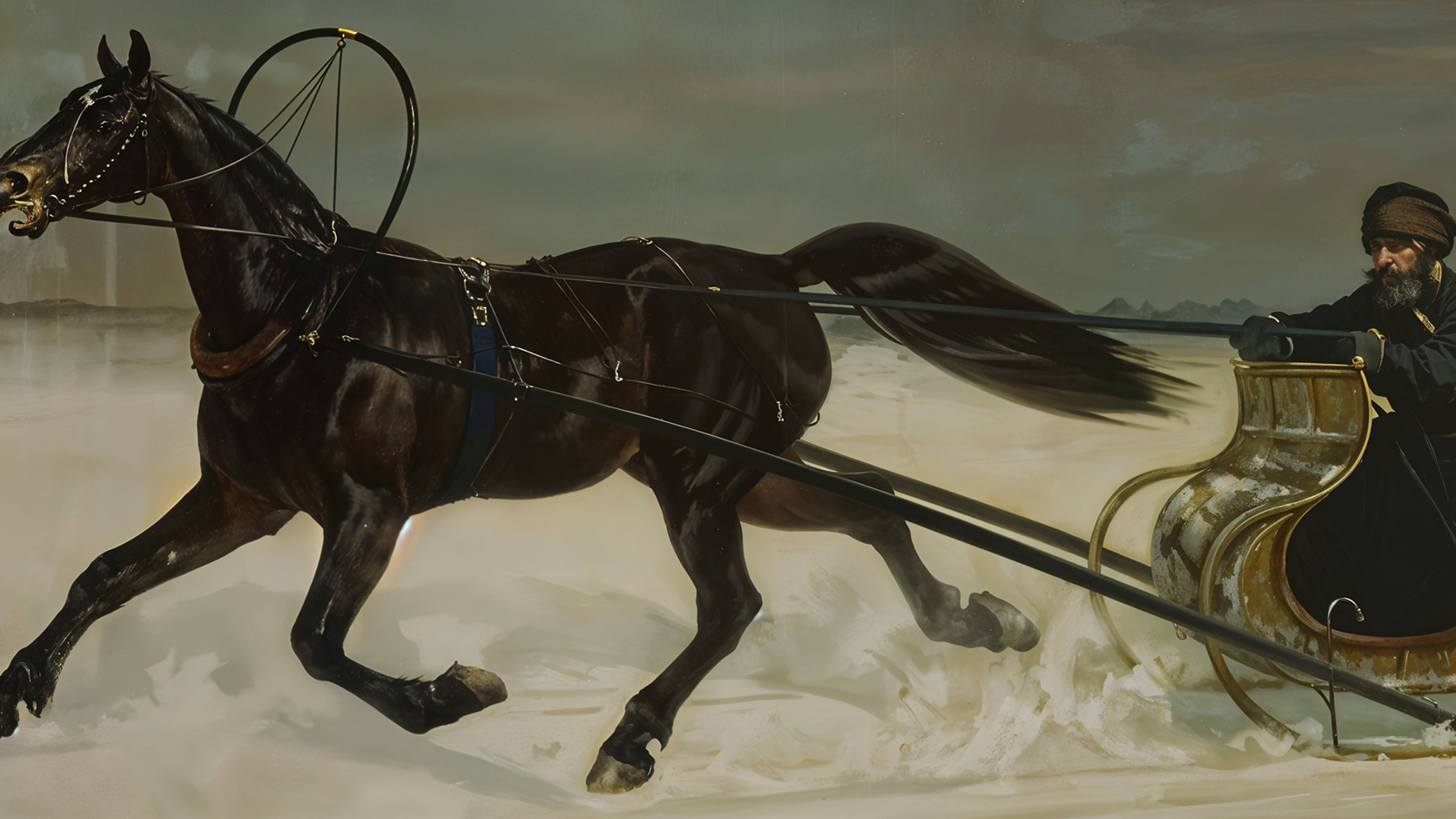
Paris, 1927. A Russian émigré named Arcady Fixon arrived with one obsession: caviar. Not caviar as an exotic curiosity to be sampled once a year on New Year’s Eve, but caviar as a daily way of life, a ritual, and a culture in its own right. Nearly a century later, the company he founded—Caviar Kaspia—is still there, in the same spot on Place de la Madeleine. And it hasn’t just survived: it has redefined the way the whole world thinks about caviar.
The Origins: A Russian Exile and the Caspian Sea
The story of Kaspia does not begin in Paris. It begins on the shores of the Caspian Sea—Kaspiïskoie More in Russian, hence the name Kaspia. It is in this inland sea—the largest in the world—that Beluga, Osciètre, and Sevruga sturgeon have been swimming for millennia. And it was there that Imperial Russia made caviar a symbol of power and refinement.
When the Bolshevik Revolution broke out in 1917, thousands of Russian aristocrats and intellectuals fled to Western Europe. Paris welcomed a considerable number of them. Among them was Arcady Fixon. He arrived with a expertise that few French people possessed at the time: that of caviar—how to select it, how to store it, and how to savor it.
In 1927, he founded Caviar Kaspia. The idea was simple but radical for its time: to make caviar not just a product reserved for embassies and official banquets, but a pleasure accessible to anyone who appreciates the finer things in life. In 1929, he took his boldness a step further and set up a tasting counter—a move that, even today, defines the company’s DNA.
La Madeleine: A Spot That's Becoming a Local Institution
In 1953, Kaspia moved permanently to 17 Place de la Madeleine, into a Haussmann-style building that would become its legendary address. The layout was unusual: on the ground floor, a delicatessen where customers could buy caviar, blinis, and vodka. On the first floor, accessible via a discreet staircase, was an intimate restaurant with walls adorned in shades of Caspian blue—dark wood, subdued lighting, and white tablecloths.
It’s all happening on the first floor. The tables are small, the service is attentive without being stiff, and the menu revolves around one ingredient: caviar. The potato with caviar—a dish of disarming simplicity, a jacket potato split in half with a generous spoonful of caviar and crème fraîche—would become the restaurant’s signature dish. Not some complicated chef’s creation. One gesture, one ingredient, pure simplicity.
What sets Kaspia apart from other Parisian restaurants of the time is its philosophy of using ingredients in their raw state. No sauces to mask the flavor, no techniques to impress. The caviar speaks for itself—or it doesn’t. It is this commitment to quality that has attracted, decade after decade, a loyal clientele: artists, writers, diplomats, and later models, fashion designers, and celebrities. They all come for the same thing—a moment of tranquility with an exceptional product.
Kaspia Caviar: Expertise in Selection
Kaspia has never been a caviar producer. It is a caviar selector. The distinction is crucial.
A producer raises sturgeon and harvests their roe. A selector tastes, compares, and evaluates the roe, selecting only the very best. It’s the same profession as that of a top wine merchant: the talent lies not in production, but in the palate.
Every batch of caviar bearing the Kaspia name has been selected according to strict criteria: the size and uniformity of the grains, their firmness (each grain must burst individually on the palate, never turning into a mush), their color, their flavor profile, and their finish. The curing is always done using the malossol method—less than 3 % of salt—because this is the only way to allow the natural flavors to shine through.
The current product line reflects this commitment at every level:
Visit Caviar Baeri is the opening note—mild, with a hint of the sea, and a hint of hazelnut. The’Imperial Baeri This is the selected version: the same beans, more rigorous sorting, and longer-lasting aromas. The’Osciètre Selection becomes more complex—with notes of nuts and butter that linger on the palate. The’Royal Osciètre takes this complexity a step further, with larger grains and a longer aging process. The Kaspia Gold, with its golden hues, is reserved for mature sturgeon and exceptional harvests.
And then there's the Beluga. The Royal Beluga and the Beluga Reserve are the top of the line—3- to 4-mm grains with a buttery flavor of almost unreal sweetness. The Iranian Beluga goes even further: the waters of the Caspian Sea, the species’ birthplace, produce a profile that European aquaculture has not yet been able to replicate.
To better understand the differences between these varieties, our A Guide to Choosing Caviar describes the flavor profiles, bean sizes, and the occasions best suited for each.
The Kaspia Lifestyle: Far Beyond Caviar
What makes Kaspia more than just a caviar brand is everything that surrounds the product. Arcady Fixon understood this from the very beginning: caviar isn’t just food—it’s a ritual. And a ritual requires its own accessories.
Visit mother-of-pearl spoon has become a symbol of this attention to detail. Metal—silver, stainless steel—causes the eggs to oxidize and leaves a metallic aftertaste. Mother-of-pearl is inert, smooth on the palate, and allows the grains to be scooped out without crushing them. The Large mother-of-pearl spoon, engraved with "Kaspia" is used for serving; the smaller one, for individual tasting.
Visit Kaspia Engraved Caviar Dish is not a decorative item. Its lower compartment holds crushed ice, which keeps the caviar at a temperature between 8 and 10 °C throughout the entire serving period—the precise range in which the flavors are released without compromising the texture. For a longer serving period, the «No Ice» display» uses an isothermal system that dispenses ice.
Vodka is an integral part of the ritual. The Vodka Blanche Kaspia is distilled to accompany caviar—served between -18 and -14 °C, its texture becomes slightly syrupy, and its neutral flavor allows the caviar to shine. The flavored vodkas — cherry, rose, bison — add variety without disrupting the harmony. And the Kaspia vodka glasses, along with ice cream, round out the menu.
Visit blinis Kaspia — thick, soft, warmed for 2 minutes at 150 °C — are the classic accompaniment. For a cocktail, the mini blinis are sized for a single bite: cream, caviar, on the palate.
Our Caviar Tasting Guide describes all of these rituals—temperature, spoons, accompaniments, beverage pairings—so you can recreate the experience of 17, Place de la Madeleine at home.
The Mac-Crohon Era: Kaspia Conquers the World
In 2011, Ramon Mac-Crohon took over as head of Caviar Kaspia. The company remained family-owned, but its vision broadened. The question was no longer simply «How can we serve the best caviar in Paris?» but «How can we share this art of living with the whole world?».
The restaurant’s 90th anniversary in 2017 served as a catalyst. Kaspia organized a global tour of pop-up restaurants—temporary eateries that replicated the style of the location at 17 Place de la Madeleine in cities where international customers were clamoring for them. The response was clear: there is a demand.
New locations are opening one after another. Dubai in October 2021, in the DIFC financial district. São Paulo in January 2022, in the Shops Jardin complex, operated by the JHSF Group (owner of the Fasano hotels). Los Angeles on Melrose Place—the most coveted fashion district in L.A. London. New York, at the Mark Hotel on the Upper East Side.
Each location has its own unique identity, but the essentials remain the same: caviar selected according to the same criteria as in Paris, served on mother-of-pearl spoons, ice-cold vodka, potatoes with caviar, and that special atmosphere—intimate without being stuffy, luxurious without being ostentatious.
From La Madeleine to Your Table: Luxury Delicacies
International expansion has raised another question: How can we offer the Kaspia experience to those who don’t live in Paris, New York, or Dubai?
It is the role of Gourmandise de Luxe — the official online store that offers access to the entire Kaspia product line. The entire caviar collection is available for order, ranging from the entry-level Baeri to the exceptional Iranian Beluga. The serving accessories — spoons, serving dishes, glasses, and pitchers — are the same as those used in the restaurant.
Whether it's your first purchase or a gift, the gift boxes let you explore the world of Kaspia without having to choose between products. The vodka and caviar set replicates the restaurant’s signature dish—the combination that regulars know by heart.
Visit Tarama with Kaspia caviar is another classic from the house that’s perfect for taking on the go—creamy, spicy, with real caviar grains mixed into the mixture. It’s the product that Parisians have been buying at the ground-floor grocery store for decades.
Kaspia Today: Collaborations and Culture
What is remarkable about Kaspia’s evolution is the way the brand has managed to stay relevant without losing sight of its identity. Its recent collaborations are a testament to this.
In collaboration with the Casablanca fashion house, Kaspia has created a capsule collection that blends Charaf Tajer’s Mediterranean aesthetic with Kaspia’s Caspian blue. With jeweler Begüm Khan, a series of jewelry — earrings, necklaces, brooches — featuring caviar and sturgeon motifs. In collaboration with the Hôtel de Crillon, limited editions that bring together two Parisian institutions. With perfumer Kilian Hennessy, a candle that captures the restaurant's atmosphere.
These collaborations aren’t just opportunistic merchandising. They tell a coherent story—that of a house that has always attracted creatives, artists, and free spirits, and that chooses to work with them rather than simply welcome them.
What Hasn't Changed in Nearly 100 Years
The number of locations is growing, collaborations are coming one after another, and the online store ships worldwide. Kaspia in 2026 is nothing like Kaspia in 1927. And yet, the essence remains the same.
Caviar remains the heart of the matter. Not just another product—it is *the* product. Each tin is selected with the same meticulous care that Arcady Fixon applied to his first shipments from the Caspian Sea. The curing is done using the malossol method. The spoon is made of mother-of-pearl. The vodka is ice-cold. The potato is cut in half.
What has changed is how people access it. In 1927, you had to walk through the door of a shop on Place de la Madeleine. Today, a Caviar Baeri or a Royal Osciètre is delivered to your home via express shipping, packaged in the same boxes as at the restaurant, with the same cold chain.
The gesture itself hasn’t changed. Open the box. Smell the sea. Scoop up the grains with the mother-of-pearl spoon. Roll them against the roof of your mouth. And remember that a man who arrived from Russia nearly a hundred years ago devoted his life to that very moment.

