Free delivery on orders over €150


Caviar Baeri: the guide to choosing, tasting and buying the right caviar

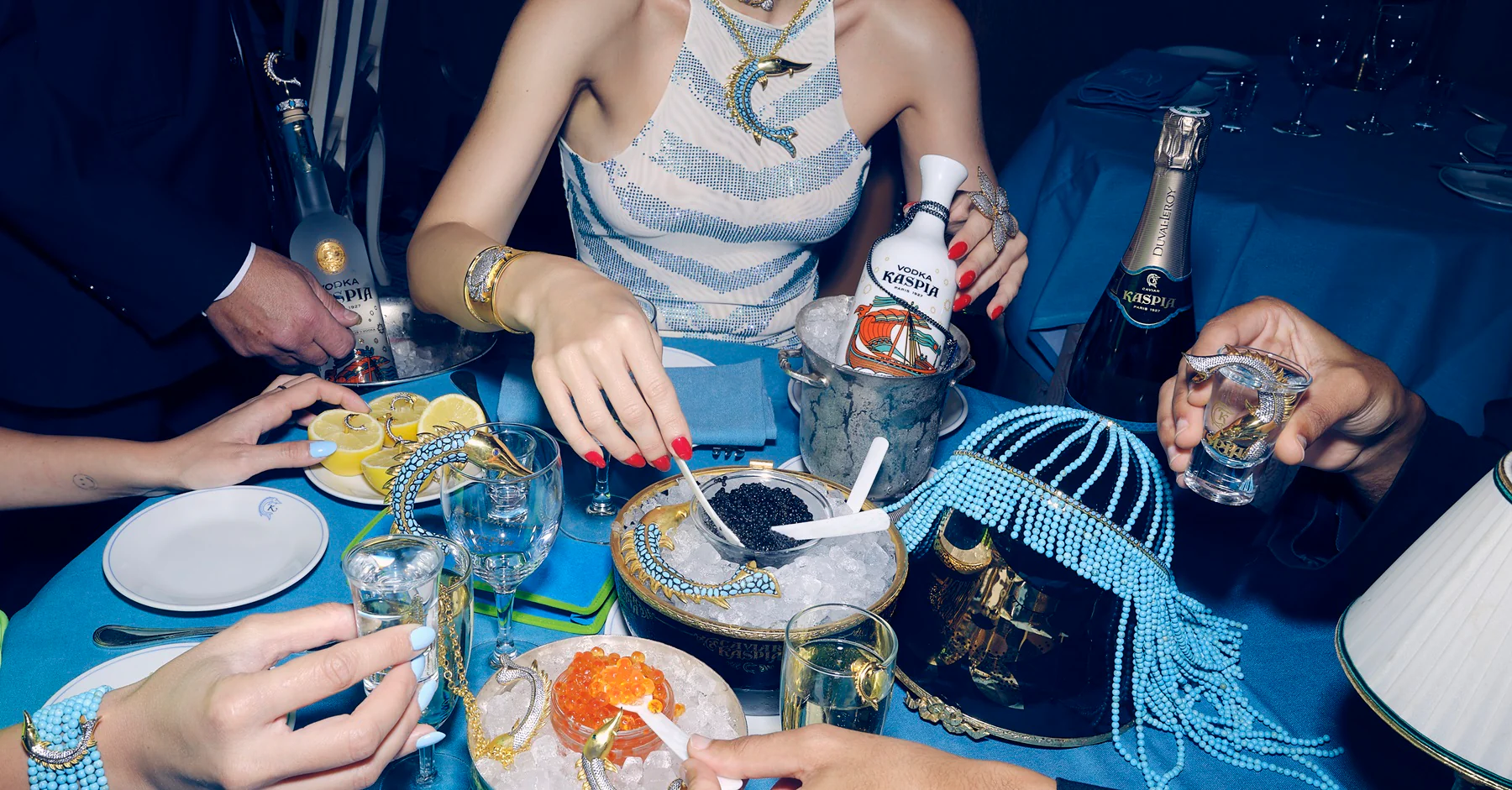
Baeri caviar is the most popular caviar in France. It is produced from Siberian sturgeon (Acipenser baerii), it stands out for its small grains ranging from charcoal gray to golden brown, its distinctly briny flavor, and its hint of fresh hazelnut. Its price—starting at €63 for 30 grams at Kaspia—also makes it the most affordable caviar on the high-end market.
But «affordable» doesn’t mean simple. Between a Bulgarian-raised Baeri at €40 and an Italian Imperial at €78, the difference in quality can be significant. This guide explains what makes the difference, how to taste it properly, and what pitfalls to avoid when buying online.
The Siberian sturgeon: where does Baeri caviar come from?
L’Acipenser baerii is native to the rivers of Siberia. In the wild, it can grow up to 2 meters long and live for more than 60 years. In captivity, it takes between 7 and 9 years for a female to produce her first eggs—it is this patience that accounts for part of the price.
Why is it so common on aquaculture farms? Because it adapts. Unlike the Beluga (Huso huso), although extremely difficult to farm, the Baerii thrives in freshwater farming conditions. It is now found in France (Aquitaine, Sologne), Italy (Brescia, Calvisano), and Bulgaria. Maison Kaspia selects its Baeri from Italian and French farms based on a consistent criterion: the slow maturation of the eggs, which directly determines the fineness of the grain.
One point that is often overlooked: the same sturgeon does not produce the same caviar depending on the length of maturation. A Baeri harvested at 7 years old will have smaller, firmer grains than a 9-year-old specimen, whose more developed eggs offer a melt-in-your-mouth texture and a richer flavor profile. This is exactly what sets the Classic Baeri Caviar from Baeri Imperial Caviar in the Kaspia collection.
What does Baeri caviar taste like?
Forget the common misconception that caviar «tastes like fish.» A high-quality Baeri caviar starts with a distinct briny flavor, followed by a fresh nutty note, and finishes with a buttery aftertaste that lingers on the palate without any bitterness. The texture is melt-in-your-mouth: the grains burst on the palate with a slight resistance before releasing their aromas.
The profile varies depending on the quality:
Classic Baeri — Grains measuring 1.8 to 2.2 mm, anthracite gray in color. A clean, briny flavor with a distinctive nutty note. This is a straightforward, uncomplicated caviar that appeals to both connoisseurs and newcomers alike.
Imperial Baeri — Larger grains, ranging from 2 to 2.8 mm, with a color ranging from gray to golden brown. A softer, melt-in-the-mouth texture. The flavor is more nuanced: the iodine note is more subtle, while the buttery flavor takes center stage, with a roundness that reflects expert aging and particularly delicate salting. At Kaspia, the salting is calibrated to enhance each batch rather than to standardize the product.
Baeri vs. Osciètre: What’s the difference?
The question comes up time and again. In short: Baeri caviar is more accessible in terms of both taste and price, while Osciètre caviar is more complex.
The Osciètre (Acipenser gueldenstaedtii) has a more maritime character, with notes of dried fruit and sometimes a hint of forest floor. Its grains are larger and firmer. In terms of price, expect to pay 30 to 50 % more than for Baeri for equivalent quality.
If you’re new to caviar, Baeri is the best place to start. Its flavor is clean without being overwhelming. If you’re looking for complexity and that «wow» factor on a holiday platter, Osciètre is the way to go. And if budget isn’t an issue: the Beluga, with its 3-mm grains and creamy texture, is in a league of its own.
How much does Baeri caviar cost?
The price depends on three factors: the farm of origin, the sturgeon’s maturity, and the packaging. Here is the Kaspia price list, which is at the high end of the market:
| Quantity | Classic Baeri | Imperial Baeri |
|---|---|---|
| 30 g | 63 € | 78 € |
| 50 g | 105 € | 130 € |
| 100 g | 210 € | 260 € |
| 250 g | 525 € | 650 € |
| 500 g | 1 050 € | 1 300 € |
The price per gram decreases with quantity: €2.10/g for a 30-g pack versus €2.10/g for a 100-g pack of the classic variety (price unchanged at Kaspia), and €2.60/g for the Imperial variety. On the French market, you can find Baeri starting at €1.50/g from direct producers like Neuvic or Sturia, but the selection, salting, and traceability are not the same. Kaspia selects its batches one by one—a process that comes at a cost, but one that guarantees a consistency that large-scale producers cannot always maintain.
For a first-time experience, The 30-gram size is enough for two people to enjoy on its own. Allow 50 grams if you plan to serve blinis or toast on the side.
How to Enjoy Baeri Caviar
Three rules. Three. Not fifty.
Temperature. Take the container out of the refrigerator 10 minutes before serving, no more. Caviar is best enjoyed at a temperature between 4 and 8°C. If it’s too cold, the flavors won’t come through. If it’s too warm, the texture will lose its firmness and the richness will overpower the dish.
Utensil. Mother-of-pearl, bone, or horn. Never metal—silver and stainless steel oxidize the eggs on contact and impart an unpleasant metallic taste. If you don’t have a mother-of-pearl spoon, use a plastic spoon rather than a small silver spoon. Kaspia engraves its own mother-of-pearl spoons — an investment that truly transforms the tasting experience.
Agreements. The ultimate classic: chilled vodka and warm blinis. The vodka cleanses the palate between each bite, while the blini provides a warm, neutral base that brings out the flavors. If you prefer champagne, choose a brut nature or a blanc de blancs—a dosed champagne would overwhelm the delicate flavors of the Baeri.
Avoid lemon (it neutralizes the iodine), onion (too overpowering), and too much crème fraîche (it masks the flavor). A touch, if you must. Baeri caviar has enough character to stand on its own.
Storage: Before and after opening
Baeri caviar should be stored between −2°C and +2°C. This is the coldest part of your refrigerator, usually the bottom shelf or the meat compartment. Most home refrigerators maintain a temperature between 3 and 5°C—if this is the case for you, place the container against the back wall.
Box closed : The best-by date on the package applies; generally, this is 3 to 4 months after packaging. Never freeze caviar—freezing causes the grains to burst and ruins the texture.
After opening : Consume within 48 hours. Cover the container tightly with plastic wrap (the wrap should touch the surface of the roe) to minimize oxidation. After 48 hours, the caviar does not pose an immediate health risk, but it loses its freshness and its flavors become less pronounced.
French Baeri caviar vs. imported: does it make a difference?
Yes, but not in the way you might think.
French Baeri caviar (from Aquitaine and Sologne) benefits from water and terroir that give it a slightly different profile than Italian or Bulgarian Baeri. French producers such as Sturia and Caviar de Neuvic emphasize traceability, short supply chains, and, in some cases, the IGP designation.
The Italian Baeri—the one Kaspia selects—comes from long-aged batches in the plains of northern Italy. The spring water and climatic conditions result in a rounder grain and a melt-in-your-mouth texture. It’s not a matter of «better» or «worse»: these are simply different profiles, like two wines made from the same grape variety but grown in distinct terroirs.
What really matters is the expertise in selecting and salting. A perfectly salted Baeri — malossol, — which literally means «lightly salted» in Russian — lets the grain speak for itself. An oversalted Baeri masks everything. Kaspia, founded in 1927, has a century of experience in this selection.
Frequently Asked Questions About Baeri Caviar
What exactly is Baeri caviar?
Baeri caviar is made from the roe of the Siberian sturgeon (Acipenser baerii). It is the most widely produced and consumed caviar in France, thanks to the sturgeon’s adaptability to farm conditions and its balanced, briny, and nutty flavor.
Is Baeri caviar «real» caviar?
Yes. The term «caviar» refers exclusively to sturgeon roe, regardless of the species. Baeri is caviar just as much as Beluga or Osciètre. Substitutes made from salmon roe, lumpfish roe, or seaweed are not caviar—they are imitations.
What is the best Baeri caviar?
One with intact grains, a melt-in-your-mouth texture, and a subtle saltiness. A good Baeri should not be too salty or too firm. The Imperial Baeri Kaspia, with its 2–2.8 mm grains and buttery flavor profile, represents the best this variety has to offer in terms of curatorial selection.
Is Baeri caviar eaten on its own or as a side dish?
Both. When enjoying it on its own, a single spoonful is enough. As a side dish, it pairs well with warm blinis, steamed potatoes, scrambled eggs, or a simple slice of buttered toast. Avoid overly strong flavors that overwhelm its delicate taste.
Can I order Baeri caviar online?
Yes. Gourmandise de Luxe We offer express delivery in France via cold chain. Sizes range from 30 g (a tasting portion for two) to 1 kg (for receptions and events). The caviar is shipped in insulated packaging with ice packs.
Our selection of Baeri caviar
Maison Kaspia offers two varieties of Baeri, each selected from Italian farms that use controlled maturation:
Visit Caviar Baeri (starting at €63) — the classic. Fine grains, a distinct briny flavor, and a hint of hazelnut. Perfect for a first taste of caviar or a tasting with friends.
Visit Baeri Imperial Caviar (starting at €78) — the premium selection. Larger beans, a melt-in-your-mouth texture, and a buttery, smooth flavor profile. For those who are already familiar with Baeri and want to take it up a notch.
For a ready-to-use gift, the Vodka and Caviar set pairs a bottle of Kaspia Vodka with a selection of caviar—the perfect pairing, ready to give as a gift.


